China and Europe are in a race for a technology that could revolutionize humanity's energy supply. Who is building the world's first fusion reactor? The promise: almost unlimited electricity, generated as in the sun itself.
China has now achieved another milestone.
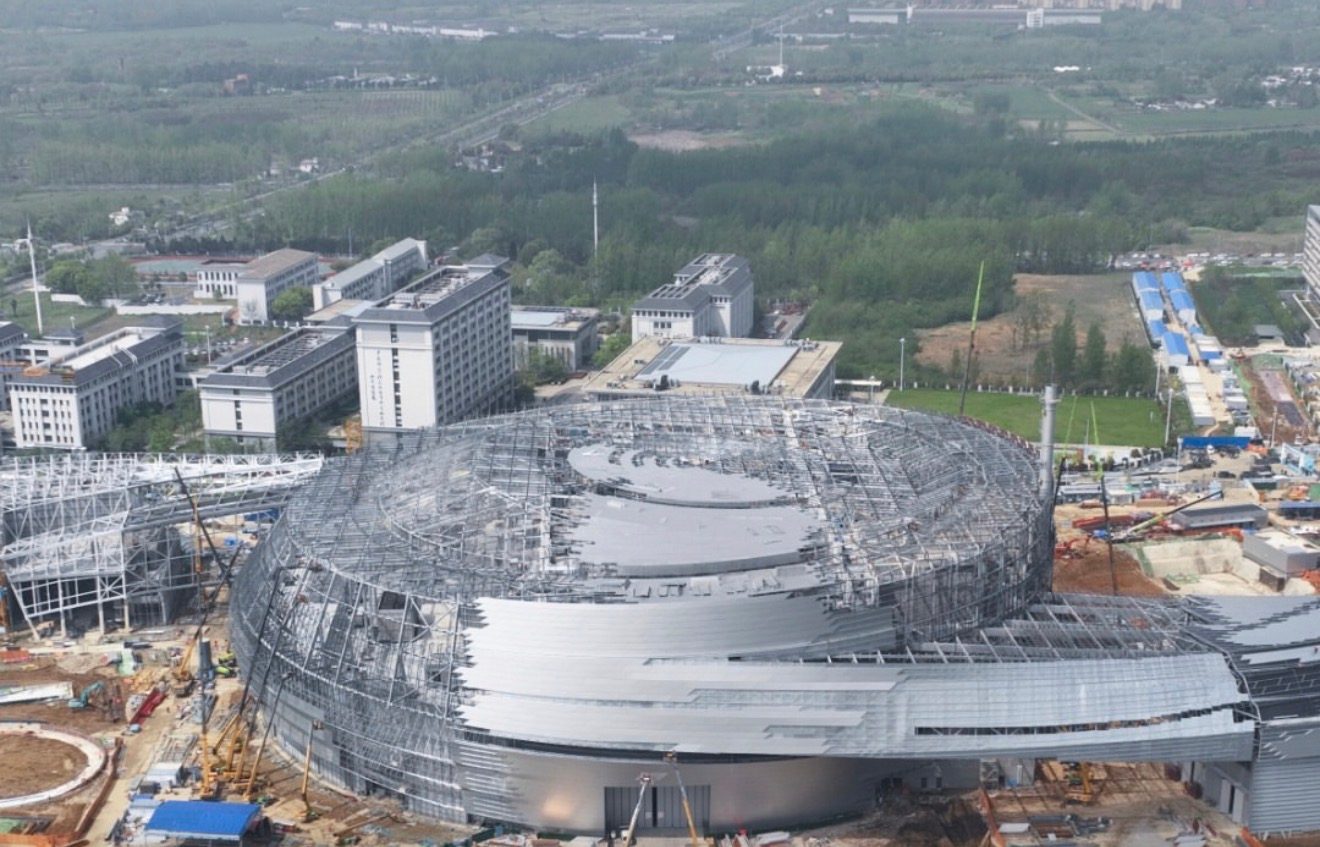
There are still enormous technical hurdles in the way. But China is making pace now: the new BEST fusion plant in Hefei (China) is already more than half built. Around 2030, it will be shown there how electrical power is generated from nuclear fusion.
Later, a plasma with temperatures of more than 100 million degrees Celsius is expected to be produced inside the power plant. That would make it significantly hotter than the center of the sun at about 15 million degrees. The new plant is supposed to produce a so-called "burning plasma". Nuclear fusion itself provides a significant part of energy.
Researchers assume that there is a seemingly endless source of energy.
The problem: No material on Earth could withstand these temperatures permanently. This is why the plasma with huge magnetic fields must be kept afloat without touching the walls of the reactor. This is exactly what superconducting magnets are used, which must be cooled to around minus 269 degrees Celsius at the same time.
There has already been a breakthrough. In the predecessor reactor EAST, researchers held plasma of more than 100 million degrees hot stable for 1066 seconds. And more: In the summer the superconductor magnets for the new plant were successfully tested. The huge magnetic coils (581 tons) are supposed to keep the million-degree hot plasma afloat later.
China is not alone in the international race. In Cadarache, southern France, ITER is creating the largest fusion project in the world, also an artificial sun. It was only in early October that the last European segment of the huge vacuum chamber was delivered there, an important milestone for the construction of a reactor.
But ITER is supposed to provide above all the scientific basis for future fusion power plants. Commissioning is scheduled for 2034 to 2036. Taking it a step further in China.