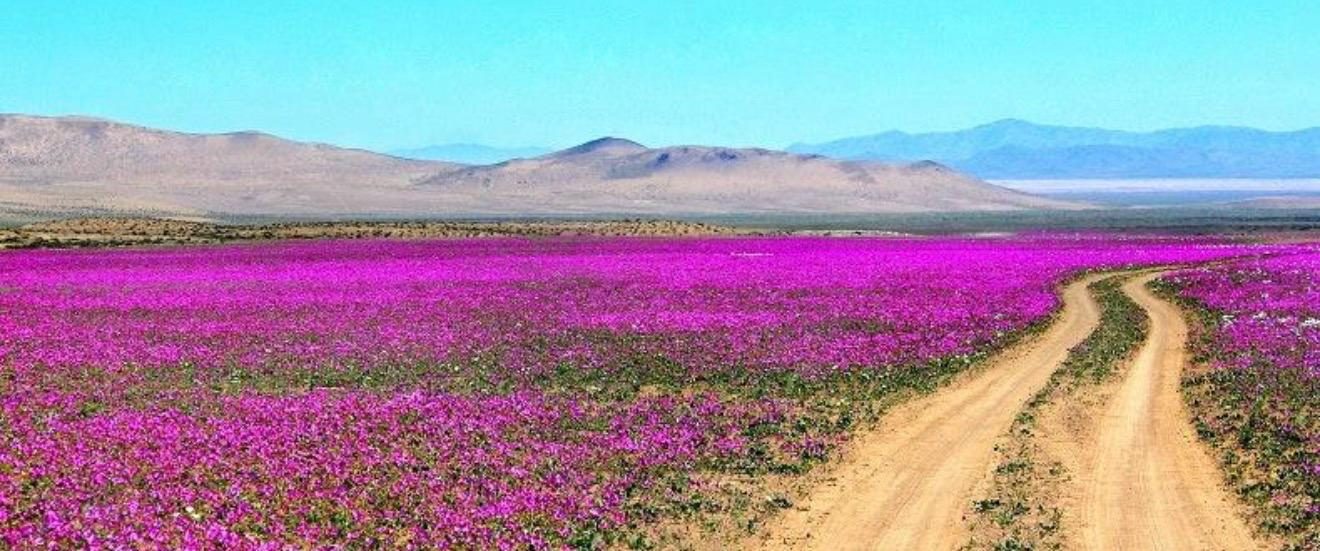
The Atacama Desert, one of the driest places on Earth, has changed appearance after heavy rains in northern Chile. Vast stretches of land that are normally parched have been carpeted with violet and white blossoms in a natural phenomenon known as the "flowering desert".
A desert bloom is a climatic phenomenon that occurs in various deserts around the world. The phenomenon consists of the blossoming of a wide variety of flowers during early-mid spring in years when rainfall is unusually high.
The blossoming occurs when the unusual level of rainfall reaches seeds and bulbs that have been in a latent or dormant state, and causes them to germinate and flower in early spring. It is accompanied by the proliferation of insects, birds and small species of lizards.
Climatically, the event is related to the El Niño phenomenon, a band of anomalously warm ocean water temperatures that occasionally develops off the western coast of South America, which can lead to an increase in evaporation and therefore precipitation.
The current El Niño episode could be the most intense since comparable records began four decades ago. What causes flooding elsewhere makes the desert bloom here. This natural spectacle could still be admired through November. Authorities expect about 1 million visitors.
The rains that hit Chile in July also had serious consequences. At least 13 people were killed and around 4,000 homes were destroyed or suffered major damage.